Free guide · The monitoring contract
Cold medicine and your monitoring contract
You get a cold. You go take some sinus medicine. You’re under monitoring now, and the sinus medicine you have always reached for has a prohibited substance in it. That’s the whole problem, and it catches people because we’re just not used to doing that. You go to the pharmacy and pick out what you need.
I did it. I took a cold medicine with dextromethorphan in it and it produced a positive screen. That wasn’t a false positive. It was a real one, because the substance was really in the bottle and I really took it.
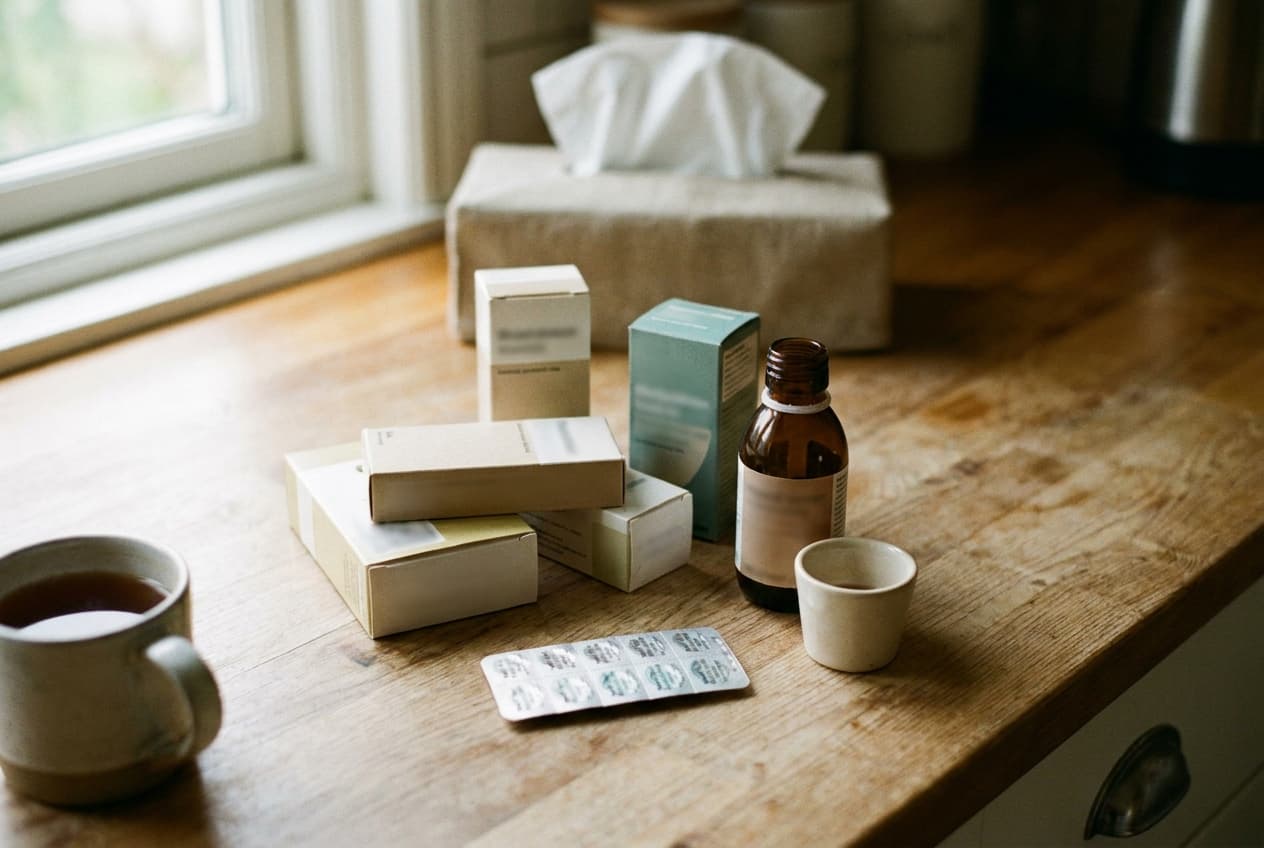
These are two different problems
The first is the one that got me. The contract lists substances you can’t have, an ordinary product contains one of them, and the screen is correct. Nothing about that’s a mistake in the lab.
The second is different. A few common ingredients look enough like something else that an initial screen reads positive and confirmation testing later clears it. That one resolves, but not before a phone call.
The table below marks which is which, because the two need different things from you.
The shelf, ingredient by ingredient
Panels differ from program to program. Treat this as orientation, then confirm with yours.
The brand name is not the medicine
This is the part I would want to know. Two different products are sold as Sudafed PE Sinus Congestion. One is phenylephrine on its own. The other adds diphenhydramine, which is sedating and turns up in the false-positive reports. Sudafed PE Head Congestion Plus Flu Severe is a third thing again: acetaminophen, dextromethorphan, guaifenesin, and phenylephrine, and dextromethorphan is the one named outright in a lot of contracts. Same shelf, nearly the same words on the front of the box.
Mucinex and Mucinex DM are the same story. So is Claritin, which is loratadine on its own, against Claritin-D, which adds pseudoephedrine to it. Zyrtec and Zyrtec-D split the same way. That pattern is at its worst on the allergy aisle, because an allergy tablet is the last box anybody thinks to check.
The night formulas are their own maze. ZzzQuil is diphenhydramine, but ZzzQuil Ultra is doxylamine. Robitussin sells more than one Day and Night pack, and they don’t all use the same antihistamine: some are doxylamine, and at least one is chlorpheniramine. Nothing on the front of the box tells you which one you picked up.
The letters after the name are doing all the work, and they change between product lines, package sizes, and years.
So the habit worth building is small: turn the box over and read the active ingredients panel, every single time, including on a brand you have bought for twenty years.
If a screen does come back positive
The first you hear of it’s a phone call from a medical review officer, usually a physician. That person’s job at that moment is to look for a medical explanation: a medication that interacts, a condition that could account for it. They gather information before they tell you which part of the screen was positive, so the call opens like a history and not like an accusation.
You also have to remember that these are drug screens. They aren’t confirmations. On the off chance that you do get a positive screen, it’ll typically be followed up with some sort of confirmation. There are rare instances of allowed medications like acetaminophen and ibuprofen causing reactivity on certain tests, but you’d be cleared by any follow-up testing.
Knowing that in advance changes how the call goes. Have the boxes. Have the dates.
What I keep in the cabinet
Plain guaifenesin. Saline spray. Acetaminophen, ibuprofen, or naproxen. Honey, lemon, and a kettle. Boring works, and boring is easy to explain.
The same label habit applies to the pain relievers. Tylenol Extra Strength is acetaminophen and nothing else; Tylenol PM adds diphenhydramine. Advil is ibuprofen; Advil PM adds diphenhydramine, and Advil Cold and Sinus adds pseudoephedrine. Aleve is naproxen; Aleve-D adds pseudoephedrine.
Product names and active ingredients on this page were checked against the FDA labels published in the National Library of Medicine’s DailyMed database in August 2026. Cross-reaction reports are from the published pharmacy literature; the EtG detection window is a major reference laboratory’s published figure. Formulations change, so check your own box.
This page describes my personal experience and publicly available information about screening panels. It’s not medical advice. Your contract and your program’s rules control. When in doubt, call first.